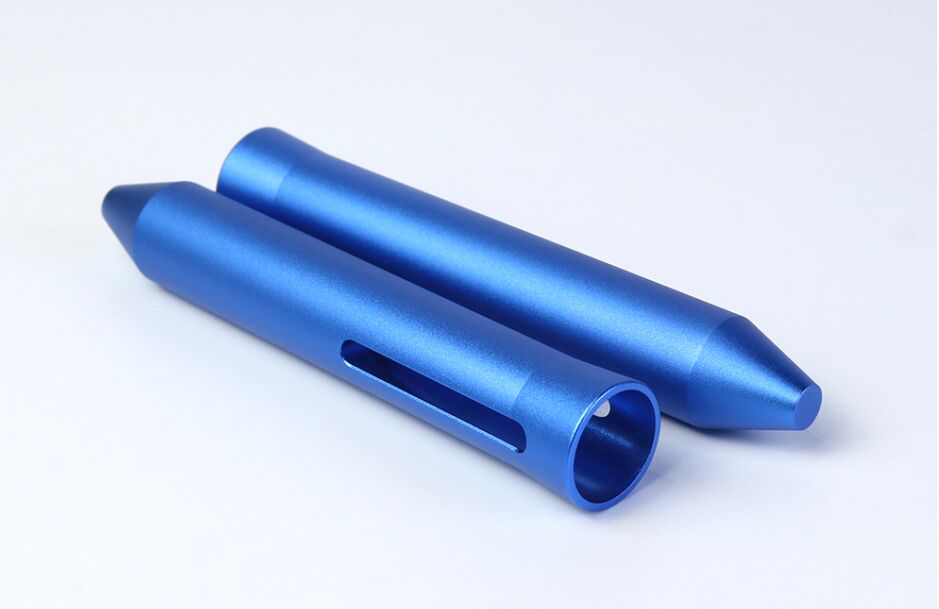
Professional CNC Machining and Custom Laser Engraving of Anodized Aluminum Parts
Achieving high-precision machining coupled with flawless, customized aesthetic finishing for aluminum parts is a growing demand in modern precision manufacturing. When components are destined for consumer electronics, medical devices, high-end instruments, or industrial design products, their functionality, dimensional accuracy, surface texture, and the permanence of markings are equally crucial. Improper machining or surface treatment can lead to dimensional deviations, surface color inconsistencies, unclear markings, or poor durability, ultimately compromising the overall product quality.
This guide provides an integrated workflow from material selection to the final product, based on extensive hands-on experience with CNC machining of aluminum alloys (such as 6061, 7075) and subsequent processes like bead blasting, anodizing, and laser engraving. We focus on the critical control points and interconnectivity at each stage of the process to ensure the realization of a final product that is both high-precision and possesses a premium look and feel.
1. The Core Challenge: Synergizing Dimensional Accuracy with Surface Aesthetics
While aluminum is easy to machine, simultaneously guaranteeing micron-level tolerances and premium surface effects—such as a matte bead-blasted finish, uniform blue anodizing, and sharp, clear laser engraving—presents multiple challenges:
- Residual Stress from CNC Machining: Can lead to slight deformation during subsequent processing or in use.
- Consistency of Surface Pre-treatment: The uniformity of the bead blasting directly affects the color consistency and matte texture after anodizing.
- Anodizing Process Control: The color, thickness, and uniformity of the blue anodic film are extremely sensitive to electrolyte parameters, temperature, and time.
- Laser Engraving Compatibility: The engraving result (e.g., contrast, depth) depends on the characteristics of the anodic film (color, thickness) and laser parameters.
Critical Observation: Our production data indicates that over 60% of surface appearance defects (color variation, blurry engraving) can be traced back to insufficient cleaning post-CNC machining, contaminated or uneven bead blasting media, or improper pre-treatment before anodizing.
2. Integrated Manufacturing Workflow: From Precision Machining to Personalized Finishing
Achieving a high-quality final product is an interconnected, systematic process where each step lays the foundation for the next.
2.1 CNC Turning and Milling: The Foundation of Precision Forming
This is the primary step determining the part's dimensional accuracy and structural integrity, also providing a qualified substrate for subsequent surface treatments.
Tooling and Parameter Strategy (Example: 6061-T6):
- Tool Selection: Use sharp carbide tools designed for aluminum to ensure efficient chip evacuation and avoid built-up edge which can scratch the surface. For finishing, diamond tools or high-quality coated tools are recommended to achieve better surface finish (Ra values down to 0.4-0.8 μm), beneficial for uniform anodizing later.
- Coolant and Cleaning: Use dedicated aluminum cutting fluid with high-pressure flushing. Parts must be thoroughly cleaned immediately after machining to remove all oils and aluminum chips. This is crucial to prevent defects in subsequent blasting and anodizing.
Reference Parameters:
- Finish Milling: Cutting Speed 200-350 m/min, Feed per Tooth 0.03-0.1 mm, Depth of Cut 0.1-0.5 mm.
- Finish Turning: Cutting Speed 150-300 m/min, Feed 0.05-0.15 mm/rev, Depth of Cut 0.1-0.3 mm.
- Key Point: Design a micro-chamfer (C0.1-C0.2) on sharp edges to prevent excessive wear during blasting and to improve safety.
2.2 Bead Blasting: Creating the Matte Texture Substrate
Bead blasting provides a uniform matte surface texture for the part and is a vital pre-treatment for achieving high-quality anodized results.
Process Essentials:
- Media Selection: White aluminum oxide or glass beads are commonly used. The grit size (e.g., 80#, 120#, 180#) determines the surface roughness. For a blue matte anodized finish, a medium grit (like 120#) is recommended for a fine, uniform matte effect.
- Parameter Control: Air pressure, distance, angle, and time must be kept constant to ensure texture consistency across production batches. Post-blasting, another thorough cleaning (e.g., ultrasonic cleaning) is essential to remove all residual media and dust.
- Purpose: Not only removes CNC tool marks and unifies the surface but, more importantly, increases surface area for better adhesion of the subsequent anodic film. The matte texture enhances the premium appearance of the anodized color.
2.3 Blue Anodizing: Imparting Color and Protection
This process creates a hard, colored ceramic-like oxide layer on the aluminum surface.
Process Flow and Quality Control:
Pre-treatment: Degreasing, alkaline etching, neutralization. Must completely remove any contaminants remaining after blasting.
Anodizing:
- Electrolyte: Typically a sulfuric acid-based electrolyte with added organic dyes.
- Parameters: Current density, voltage, temperature, and time are strictly controlled to achieve the target blue color and film thickness (e.g., 8-12 μm). The film thickness directly affects the part's final dimensions and engraving results.
- Coloring: Electrolytic coloring or adsorption dyeing processes are used. Achieving a matte blue effect requires precise control of coloring time and potential.
Sealing: Hot water sealing or mid-temperature sealing closes the micropores of the anodic film, improving corrosion resistance, wear resistance, and color fastness.
Key Verification: Use a coating thickness gauge to check for uniformity of the anodic film and compare color consistency with a colorimeter or standard color swatches.
2.4 Laser Engraving: Achieving Permanent Customization
High-precision marking on the anodized surface, which can include logos, serial numbers, QR codes, scales, etc.
Process and Technology:
- Principle: High-energy laser causes physical or chemical changes (e.g., carbonization, vaporization) in the surface layer of the anodic film, exposing the underlying aluminum or altering the film structure to create a high-contrast mark.
- Equipment: Fiber laser marking machines are typically used due to their excellent marking results on metals, high precision, and speed.
- Parameter Optimization: For blue matte anodic films, fine-tuning of laser power, speed, frequency, and filling pattern is required. The goal is to achieve high-contrast (typically white or light grey), clear, and smooth-to-the-touch marking without burning through the anodic film. Excessive laser power can damage the film and compromise corrosion resistance.
- Advantages: Permanent, non-contact, highly flexible, programmable, suitable for complex graphics and variable data marking.
3. Example Applications of This Integrated Process
- Consumer Electronics: Phone/camera housings, headphone structural components, speaker grilles, keyboard trim.
- Industrial Equipment: Instrument panels, controller enclosures, precision fixture handles, equipment nameplates.
- Medical Devices (external, non-contact parts): Equipment housings, adjustment knobs, identification plates.
- Automotive: Interior trim pieces, button panels, bespoke emblems.
- Premium Gifts & Cultural Products: Custom trophies, commemorative items, branded merchandise.
4. Cost and Quality Control Considerations
Primary Factors Influencing Cost:
- CNC Machining Complexity: Part geometry, dimensional tolerance requirements, material removal rate.
- Surface Treatment Area and Detail: Total surface area of the part, whether internal cavities need treatment, complexity and area of the laser engraving pattern.
- Color and Effect: Developing and stabilizing special colors (e.g., specific Pantone blues) costs more than standard black or clear anodizing. Matte finishes have higher pre-treatment demands.
- Consistency Requirements: Strict control over color, blast texture, and engraving consistency for large production runs increases process control and inspection costs.
- Certification and Traceability: Complete process documentation and batch traceability systems required by industry-specific standards (e.g., medical, automotive) add administrative costs.
Key Quality Inspection Checkpoints:
- Post-CNC: Full dimensional inspection, surface roughness sampling.
- Post-Blasting: Visual inspection for texture uniformity, tactile check for residual media.
- Post-Anodizing: Film thickness test, color deviation check, corrosion resistance sampling (e.g., salt spray test), adhesion test (cross-cut test).
- Post-Engraving: Visual and magnified inspection of mark clarity, contrast, and positional accuracy; abrasion resistance test if necessary.
5. Frequently Asked Questions (FAQ)
Q1: Why is the color on my blue anodized parts uneven or inconsistent?
A1: The most common causes are:
1) Incomplete cleaning after CNC machining or blasting, leaving residual oil or contaminants on the surface
2) Uneven bead blasting texture
3) Inconsistent electrolyte temperature, concentration, or circulation during anodizing
4) Minor variations in alloy composition between different batches of raw aluminum material. Solutions include enhancing pre-treatment cleaning,
strictly controlling blasting and anodizing parameters, and conducting test panel verification for each material batch.
Q2: Laser engraving on the blue anodic layer sometimes isn't clear enough or appears charred. How can this be resolved?
A2: Lack of clarity is often due to insufficient laser energy or incorrect focus. Charing or a burnt appearance results from excessive energy. Parameter optimization testing is needed specifically for the particular anodic film color and thickness. The goal is to find the optimal parameter combination that produces high contrast (typically a clean white/grey) without damaging the anodic film surface. Matte surfaces may require different parameters than glossy surfaces.
Q3: What is the wear and corrosion resistance like for this combination of surface treatments (Bead Blast + Blue Anodize + Laser Engrave)?
A3: The anodic film itself is very hard and wear-resistant. A matte bead-blasted surface is more resistant to light scratches compared to a glossy finish. A properly sealed anodic film offers excellent corrosion resistance. If laser parameters are correct, the engraving merely changes the surface color without breaking the continuity of the anodic film, thus having minimal impact on overall corrosion resistance. Wear resistance can be further enhanced with additional coatings (e.g., clear protective lacquer spray), but this may alter the surface texture.
Our Processing and Finishing Capabilities
Precision Forming: CNC Milling, CNC Turning, Multi-axis Machining, Turning-Milling Centers.
Surface Treatment:
- Bead Blasting (various media and grits: aluminum oxide, glass beads, ceramic beads).
- Anodizing (Clear, Black, Blue, Red, Gold, etc., in Glossy/Matte finishes).
- Laser Engraving/Marking (high-precision marking on flat and curved surfaces).
- Others: Polishing, Brushing, Conductive Oxidation, Painting, etc.
Common Materials
Aluminum Alloys: 6061, 7075, 6082, 5052, etc.
Typical Accuracies
- Machined Dimensional Tolerances: ±0.01mm ~ ±0.05mm
- Anodic Film Thickness Control Tolerance: ±2μm (as required)
- Laser Engraving Positioning Accuracy: ±0.1mm
Certifications
ISO9001:2015 Quality Management System, etc.
Disclaimer: The process parameters and results described herein are based on production experience with standard 6061/7075 aluminum alloys under controlled conditions. Optimal methods and parameters may vary depending on specific part geometry, equipment status, material batch, and final application requirements. Comprehensive prototyping is strongly recommended prior to volume production to validate the suitability of the process chain for your specific product. Color representation may vary between display devices; physical color swatches should be used as the definitive reference.


 Your message must be between 20-3,000 characters!
 english
 français
 Deutsch
 Italiano
 Русский
 Español
 português
 Nederlandse
 ελληνικά
 日本語
日本語
 한국
한국
 العربية
 हिन्दी
 Türkçe
 indonesia
 tiếng Việt
 ไทย
ไทย
 বাংলা
বাংলা
 فارسی
فارسی
 polski